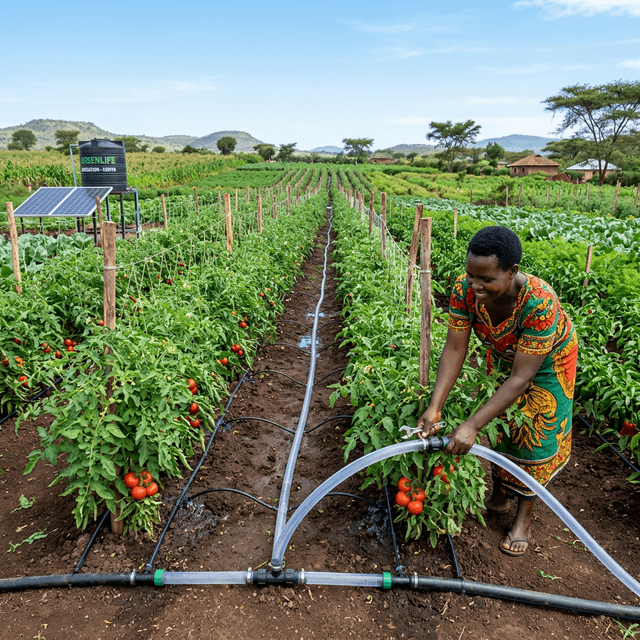
Benefits of Drip Irrigation for Vegetable Farming
Published: March 10, 2026
Water is the most precious resource in East African agriculture. Drip irrigation represents a revolution in how we manage this resource, offering significant benefits over traditional flood or sprinkler methods. For Somali farmers facing climate variability and water scarcity, drip systems provide a sustainable path to increased productivity and food security.
Water Efficiency & Conservation
Drip systems deliver water directly to the root zone, reducing evaporation and runoff by up to 50-60%. This precision irrigation allows farmers to expand their cultivated area even with limited water supplies. In Somalia's arid regions, this efficiency translates to more reliable harvests during dry seasons and reduced dependency on unpredictable rainfall patterns.
Enhanced Crop Quality & Yield
Consistent moisture levels prevent the stress that leads to fruit cracking and blossom end rot, resulting in more uniform and marketable produce. Drip irrigation enables precise nutrient delivery through fertigation, ensuring optimal plant nutrition throughout the growing cycle. Farmers report yield increases of 20-40% when transitioning from traditional irrigation methods.
Weed Suppression & Labor Savings
Because water is only applied where it's needed, the spaces between rows remain dry, which significantly inhibits the growth of weeds and reduces the labor required for weeding. This targeted approach also minimizes soil erosion and preserves beneficial soil microorganisms in the root zone.
Climate Resilience
Drip irrigation systems are particularly valuable during Somalia's extended dry periods. By maintaining consistent soil moisture, crops can continue growing even when rainfall is scarce. Combined with solar-powered pumping solutions, drip systems provide energy-efficient water management that's independent of grid electricity.
Economic Benefits
While the initial investment in drip infrastructure requires capital, the long-term savings in water, labor, and fertilizer costs typically result in payback periods of 2-3 seasons. Higher yields and improved crop quality command better market prices, making drip irrigation a sound investment for commercial vegetable producers.
Barwaaqo Agri Group's Approach
We design customized drip irrigation systems that consider local soil conditions, crop requirements, and water source availability. Our solutions include solar-powered pumps for remote locations and training programs to ensure farmers can maintain and optimize their systems for maximum benefit.